
When a Tragedy Becomes a Mirror
Tragedies like Camp Mystic resist simple explanations. They carry grief first, and questions second. While it is natural to look for meaning in moments like these—especially when failures appear preventable—we should do so with humility, remembering that every statistic represents a life, and every failure carries human cost. But, most of all, we must all look at tragic events such as these and examine them with an unbiased and discerning eye to better ensure that such a tragedy does not happen again.
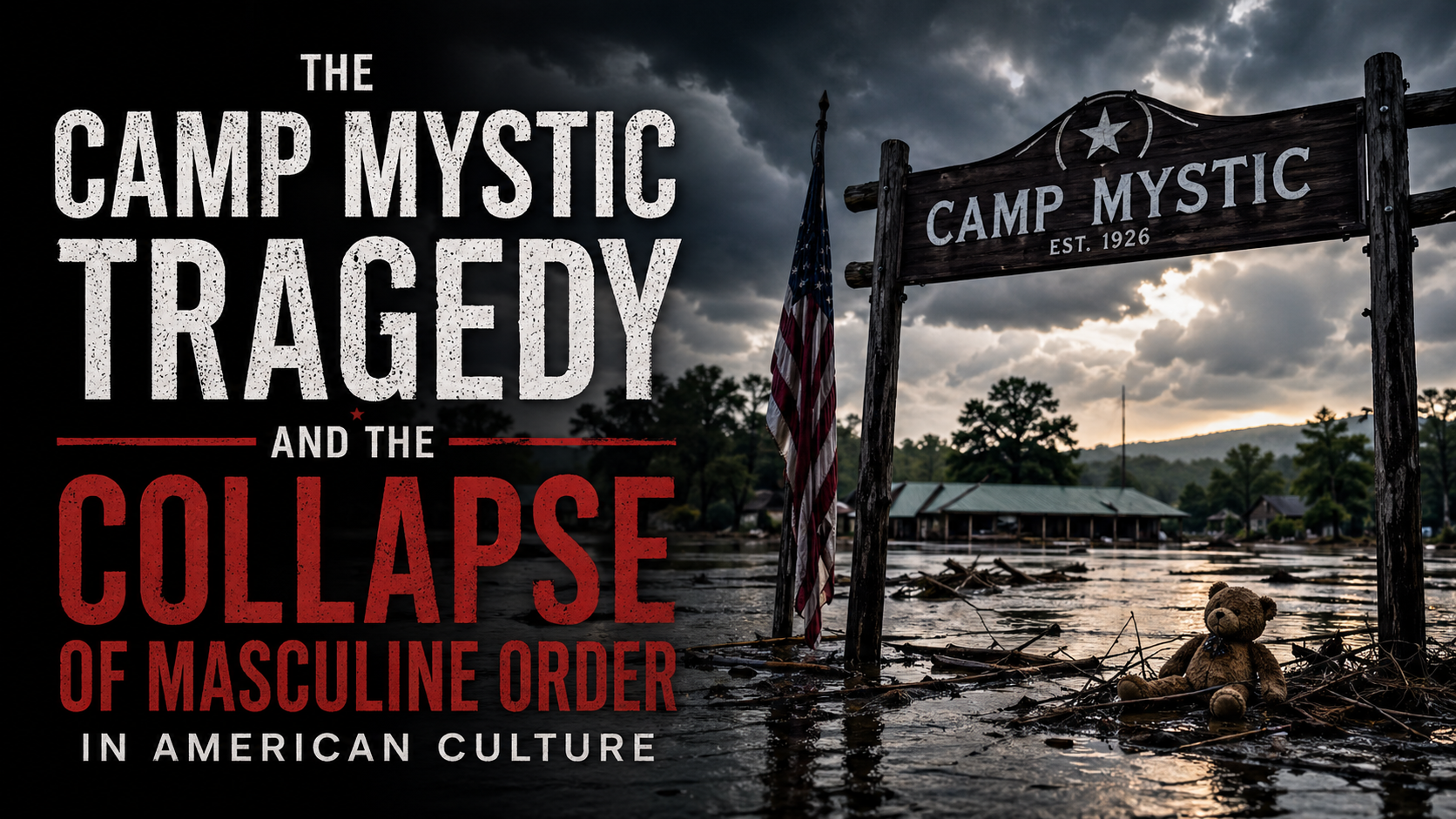
Here is what has been reported: In the early hours of July 4, 2025, rising floodwaters tore through Camp Mystic in Texas Hill Country. Within minutes, cabins were submerged. Children were trapped. Chaos replaced structure.
By the time the waters receded, 25 young girls, two counselors, and the camp director were dead.
This was not simply a natural disaster.
It was a failure—layered, systemic, and deeply human.
Investigations revealed a pattern:
- No clear evacuation plan
- No emergency drills
- Undertrained staff
- Delayed response to weather warnings
- Poor communication systems
Officials identified over 20 critical deficiencies in emergency preparedness, including unclear staff responsibilities and lack of evacuation procedures.
Some counselors were teenagers with no emergency training, tasked with protecting younger children in a life-threatening crisis.
This is where the conversation usually ends: incompetence, negligence, tragedy.
But that explanation, while true, is incomplete.
Because beneath the procedural failures lies a deeper question:
What kind of culture produces institutions that cannot act decisively in moments that demand responsibility, authority, and protection?
The Anatomy of Failure: When Responsibility Dissolves
The Camp Mystic disaster was marked by a striking absence—not of people, but of clear, decisive leadership under pressure.
Reports indicate:
- No designated emergency chain of command
- No structured evacuation protocol
- No system ensuring accountability across staff
In one accounting that was reported on apnews.com, critical emergency plans existed only in the mind of a single authority figure, rather than in a shared, actionable system.
This matters.
Because functioning institutions—especially those responsible for children—depend on something fundamental:
Someone must be clearly responsible.
Someone must be prepared to act.
Someone must lead.
When that structure erodes, tragedy becomes more likely—not because of bad intentions, but because of diffused responsibility.
From Protection to Passivity
Many of us who, particularly those 60 years and older, know of a time when societies, particularly America’s and the West, placed a high value on certain traits in men within institutional settings:
- Decisiveness under pressure
- Protective instinct
- Willingness to assume risk for others
- Clear acceptance of responsibility
These traits were not abstract ideals—they were operational necessities in environments involving danger, uncertainty, and leadership. Someone has to want to take the lead, make a decision, even if it is not popular, and be willing to take full responsibility for those responsibilities – come what may.
But modern American culture has increasingly reframed these traits.
Assertiveness becomes “overbearing.”
Authority becomes “problematic.”
Risk-taking becomes “reckless.”
At the same time, institutional cultures often shift toward:
- Consensus over command
- Sensitivity over decisiveness
- Diffused responsibility over clear hierarchy
The result is subtle—but significant:
A culture that hesitates where it once acted.
The Consequences of Cultural Neutrality
To be clear: the Camp Mystic tragedy was not caused by “gender roles.”
It was caused by failures in preparation, leadership, and execution.
Culturalization matters. Something like this could have happened in past generations. Something like this could have happened in people during the Great Depression. But can a passive observer say that the anatomy would be likely to have revealed the same? Culture shapes behavior long before a crisis hits.
When institutions:
- Avoid clear hierarchies
- De-emphasize leadership responsibility
- Blur expectations around authority
- The avoidance of hurt feelings is paramount
- Risk-taking is not rewarded or encouraged, but penalized
They risk creating environments where, in moments of crisis, no one fully steps into the burden of command.
And in emergencies, hesitation is not neutral.
It is dangerous.
The Other Side of the Equation: Shifting Female Identity
At the same time American culture has softened and marginalized the traditional expectations of male responsibility, and that of the masculine ego, it has also encouraged a transformation into a more female ego or identity.
Increasingly, cultural messaging emphasizes:
- Independence over interdependence
- Autonomy over relational roles
- Authority without corresponding responsibility structures
This is often framed as empowerment.
And in many ways, it is.
But when taken to extremes—particularly within institutional contexts, via the Media, educational institutions, and the Entertainment Complex—it can contribute to a broader cultural pattern:
The erosion of clearly defined roles, replaced by ambiguity.
And ambiguity, in high-stakes environments, creates friction where clarity is required.
A System Without Anchors
The Camp Mystic tragedy revealed something deeper than negligence.
It revealed what happens when:
- Responsibility is unclear
- Leadership is informal
- Authority is culturally softened
- Preparedness is assumed rather than enforced
Floodwaters rise fast.
But institutional decay is slower—and harder to see.
At Camp Mystic:
- The river rose from 14 feet to nearly 30 feet in under an hour
- But the failures that mattered most had been building for years
The Hard Question We Avoid
It is easy to assign blame to individuals. It is ever easier for many to look for the government to take even more of the burden of self-responsibility from us by passing more laws to govern behavior.
It is harder to ask whether our broader culture is producing environments where:
- Leadership is hesitant
- Responsibility is diluted
- Authority is culturally discouraged
The Camp Mystic tragedy forces a difficult question:
Have we culturally conditioned ourselves away from the instincts required to protect others when it matters most?
What Restoration Would Require
If there is a lesson here, it is not about returning to the past—it is about recovering function.
Healthy institutions require:
- Clear chains of command
- Defined responsibility
- Trained leadership under pressure
- A culture that values protection as a duty—not a liability
- A culture that understands that not everyone is designed to do all things
And perhaps most importantly:
A willingness to place responsibility on individuals—and expect them to carry it.
Tragedy as Warning
The deaths at Camp Mystic should not be reduced to symbolism. We should not forget what happened. They were real. Preventable. Devastating. But they are also instructive.
Because they reveal what happens when systems lose clarity, when leadership becomes uncertain, when responsibility is no longer sharply defined, and when a culture feminizes the male ego and masculinizes that of the female.
Culture with clearly defined roles and rules matters. Not that they have to be rigidly adhered to, but sets as the foundation to refer to. Or else, when a sudden crisis happens again, there will be no structural or systematic basis to move upon.
Nature delivered the flood.
But human systems determined the outcome.